Why an unpaid gig needs a plan, not a reaction
A venue refusing to pay a band invites an angry phone call, a public post or an argument at the bar. Those reactions feel satisfying, but they rarely produce money and can weaken your position. A better approach uses records, a clear request and patience. If those fail, you can move to a measured formal step.
Two community anecdotes show how different these situations can be. A UK band said an owner withheld a promised GBP250 because he disliked their genre, and a later update said the fee was eventually paid [R1]. Another musician said a wedding payment failed because of a payment service's age restrictions and remained unresolved two years later [R2]. These are individual accounts, not evidence of how often either outcome happens. They do show that a refusal and a failed payment are different problems that need different responses.
Reconstruct the agreed payer, fee, date and scope
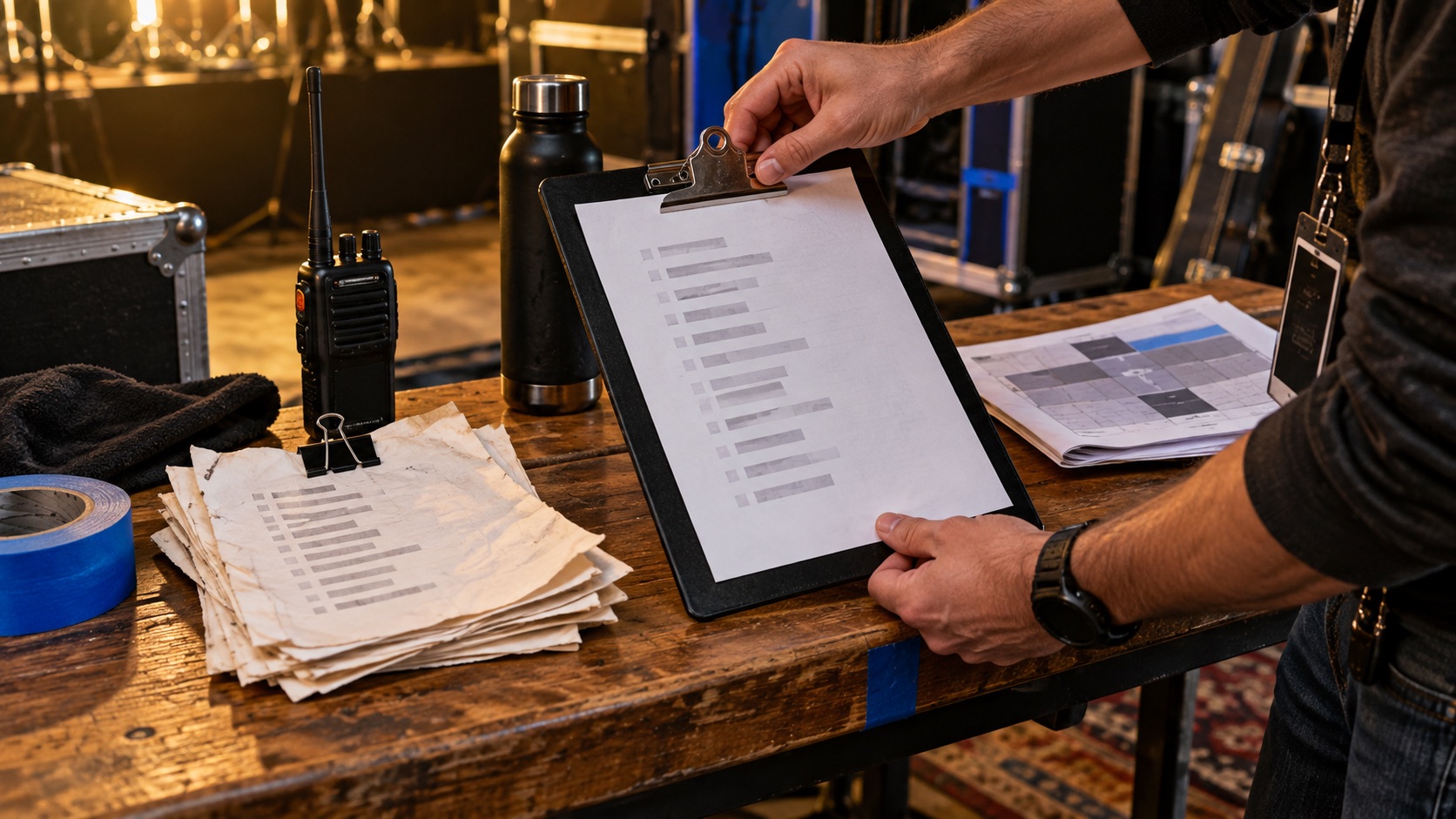
Rebuild the deal from what you can actually show. Gather every text, email, direct message, booking-platform thread, poster and invoice. Then write a one-page summary covering who agreed to pay, the amount, the date, and what you promised to deliver.
Be precise about the payer. A booker, promoter, manager and owning company can all be different people or entities. California's small-claims guidance says to identify who owes the money, how much, and the legal basis for the claim before filing [S1]. That discipline helps wherever you are. If you can't name the payer and the sum clearly, close that gap before you escalate.
- Payer: the person or business that made the promise, using its registered name if you can find it
- Fee: a flat amount, a door percentage or both, plus any agreed expenses
- Scope: set length, start time, number of sets and gear arrangements
- Payment method and timing as agreed
Separate an artistic complaint from a disputed term
Venues sometimes give reasons for not paying that have nothing to do with what was agreed, such as "the crowd didn't like you" or "bar sales were down." In the UK anecdote, the reported reason was that the owner disliked the genre [R1]. Your agreement may not have made payment depend on the owner's approval, crowd reaction or bar takings. If it didn't, a complaint about taste is usually different from a dispute over terms.
Still, be honest about real issues. Perhaps you played noticeably short, arrived late, changed the lineup, or ignored reasonable house rules or staff instructions. If so, the venue may have a fair argument about part of the fee. A request that acknowledges a genuine shortfall and proposes a fair figure is more credible than one claiming everything went perfectly.
Send a calm, itemized payment request with a response date
Send one message, ideally by email so you have a timestamped record. State the date of the agreement, the fee, the date you performed and what you delivered. Itemize the amount owed, set a specific deadline and list the payment methods you accept. California's guidance treats asking for payment as a step that comes before filing [S1]. Elsewhere, a documented request still shows you gave the other side a fair chance.
Leave out insults, threats about reviews and predictions about what a court will do. One line saying you will consider your options if you aren't paid by the deadline is enough. If the venue replies with complaints, respond only to the points that relate to the agreed terms.
Preserve proof of performance and payment attempts privately
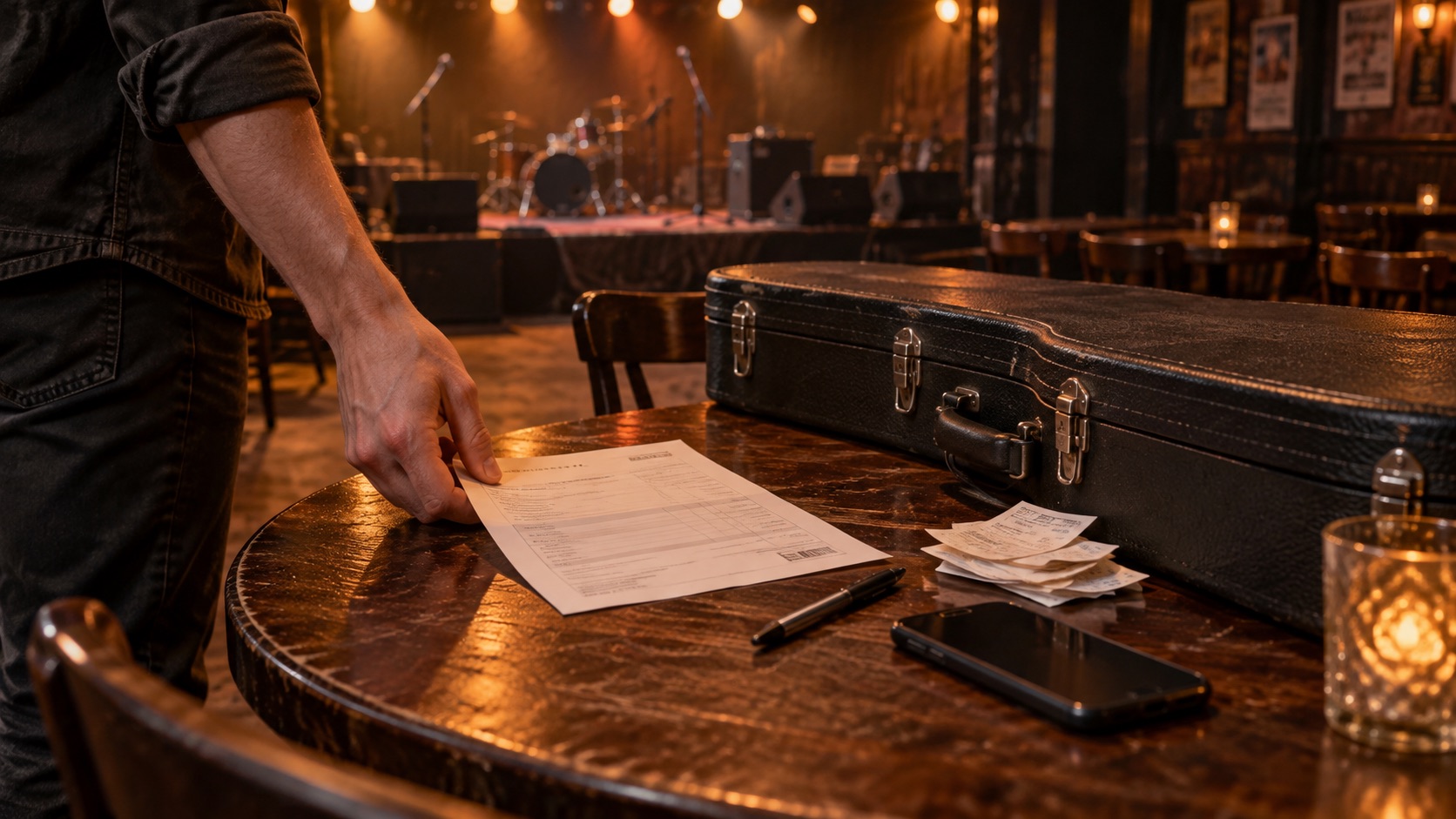
Keep evidence that you played. That can include timestamped photos or video, the venue's own promotional posts, set lists and load-in messages. Export full message threads rather than relying only on screenshots, and back everything up in more than one place. Keep a log of every request and response.
Document failed payments separately. If a transfer fails, as in the wedding anecdote [R2], save the error notices and ask the provider directly what happened. Don't assume the client did it deliberately. Keep all of this private. Publishing clients' names, private messages or personal details can create new problems and rarely speeds up payment.
Mediation and small claims, with California as one example
If your direct request fails, mediation may be worth trying. A neutral person helps both sides reach an agreement. Availability and cost vary, so ask a local court clerk, a community mediation center or a musicians' organization what exists. Union locals may help members, but check what yours actually offers.
Small-claims rules are set by each state, and other countries have different systems. The only official source cited here is California's court self-help site, which is not a federal or nationwide authority [S1]. Before you choose a court, check official guidance on where you may file. Depending on local rules, the right location can depend on where the defendant is based, where the agreement was made or performed, and how the papers can be served. Also verify dollar limits and fees. The UK anecdote [R1] involves a different legal system entirely. For complex or high-value disputes, consult a licensed attorney in the relevant jurisdiction.
Weigh amount, evidence, collectability and relationship
Before escalating, compare the amount owed with the filing fees, travel and hours a claim will cost. Ask how strong your written proof of the terms is, and whether you could realistically collect. Consider, too, what a dispute might mean for your standing in a small scene.
Collectability is easy to overlook. Winning a judgment is not the same as being paid, and no one can guarantee recovery. An operating venue at a known address is a different prospect from a private client you can't locate. Sometimes a documented partial payment, or a better contract next time, is the sensible outcome.
Hypothetical worked example
Hypothetical: a band agrees by email with a bar manager to play two 45-minute sets for $600 in cash after the show. They play both sets on time. Afterward, the manager says the owner thought they were too loud and offers nothing. The band doesn't argue on the spot. That night, they save the email thread, the bar's event post and timestamped stage photos.
The owner later offers $300, citing the volume. The emails mention no volume limit, but the band doesn't treat that as the end of the matter. They check whether the bar had posted house rules and whether local noise rules applied. They also review whether staff asked them to turn down. A text shows the manager asked once mid-set and the band lowered its levels. They then restate the $600 in an itemized email and explain why they disagree with the deduction. Had they ignored a reasonable instruction, they might have negotiated instead. When the deadline passes, they check official guidance on where to file, ask about mediation and weigh the cost against $600.
Red flags, deception and how to verify
Watch for warning signs. Examples include a booker who won't put terms in writing, a contact who can't say who pays performers, and promises to settle the money on the night. Be wary too of payment screenshots that never show up in your account and checks that are always in the mail.
Confirm payments in your own account, not from the other side's image. Contact payment providers only through their official app or website. Check the state's official business registry to confirm the venue's legal name. Be skeptical of anyone promising guaranteed recovery for an upfront fee. Never take venue property, threaten anyone or organize review campaigns.
Prevent recurrence with signed terms and clear authority
A short, signed agreement reduces misunderstandings and gives you far better evidence if something goes wrong. It should name the paying entity, the fee and expenses, the scope, and when and how you will be paid. For weddings and private events, consider a deposit at booking with the balance due on a set date.
Before the gig, confirm in writing who can approve the booking and settle payment. Whether a manager or staff member can bind the business can depend on the circumstances and local law, so get the paying entity's confirmation rather than assuming. Test unfamiliar payment methods with a small amount in advance.
- A signed agreement covering payer, fee, date, scope and payment timing
- A deposit milestone for private or high-value events
- A named person, confirmed by the business, with authority to settle
- A clause stating payment doesn't depend on crowd reaction unless you agreed to a door deal
Your next steps
- Write a one-page summary of the payer, fee, date and agreed scope
- Note honestly any real performance shortfall or rule issue before claiming the full fee
- Send one calm, itemized payment request by email with a specific deadline
- Export and back up messages, invoices, promotional posts and timestamped performance evidence
- Confirm any claimed payment in your own account and ask the provider about failed transfers
- Check official court guidance on where you may file before choosing a court
- Ask a court clerk or community mediation center whether mediation is available
- Compare the amount owed with costs, evidence strength and realistic collectability
- Use signed terms, deposits and a confirmed settlement contact for future bookings
Questions that come up next
Can a venue refuse to pay because they did not like our music?
That depends on your agreement and local law. Unless your terms made payment conditional on approval or crowd response, disliking a genre is usually different from disputing agreed terms. One UK band's anecdote described exactly this reason, and they later reported being paid [R1]. For your own case, rely on your written records and qualified local advice.
Do I need to ask for payment before going to small claims?
California's official guidance says to ask for payment before filing and to identify the debtor, the amount and the legal basis [S1]. That is one state's procedure, not a national rule. If your gig took place elsewhere, check that state's official court self-help pages, including where you are allowed to file. A documented request is sensible either way.
Should I post about the venue online to pressure them?
Generally, no. Publishing private details, making threats or organizing negative reviews can create legal risk and make you look unreasonable. Keep your evidence private, send a factual written request, and use mediation or a formal process if needed. If you want to warn other musicians, stick to verifiable facts and consider getting advice before posting.
Sources & further reading
Community discussions identify lived problems; they do not establish technical or legal requirements. Primary references support the specific claims cited above.
- R1 / COMMUNITY DISCUSSIONI DID A GIG AND THEY’RE REFUSING TO PAY! WHAT DO I DO??!! ↗
- R2 / COMMUNITY DISCUSSIONNever paid for a wedding gig ↗
- S1 / PRIMARY REFERENCECalifornia Courts: Get ready for small claims ↗